
Object Record
Images
Metadata
Catalog Number |
BR979.9.1 |
Object Name |
Box, Spice |
Description |
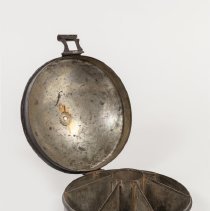
A round dome-topped tin spice box. The tin is covered with asphaltum and there are traces of red and gilt banding around the lid. A finial once surmounted the top of the dome but is now missing. The inside has six compartments for the spices and a central round compartment for a grater. |
Year Range from |
1860 |
Year Range to |
1900 |
Dimensions |
H-10.2 W-16 L-16 cm |
History |
The box is probably from Ontario. Donated by Olive Randall of Port Credit. In the 1830s, spices and herbs were used to help mask the taint of meat on the verge of spoiling. Herbs were also used for medicinal purposes, often learned from the First Nations in the area. For example, violets and willow leaves contain acetylsalicylic acid (ASA, the active ingredient in Aspirin. For the most part, herbs were used to flavour foods using such herbs as lemon balm, marjoram, min, rosemary, and sage; which would have been grown in pioneer gardens. These spice boxes, made of tin, were originally imported from England or Europe. The centre hole would hold space for a nutmeg grater. References: Maureen Adlard and Stephen Bourne. 'Upper Canada Cooking' (no date) Eustella Langdon. 'Pioneer Gardens at Black Creek Pioneer Village' (Toronto: Holt, Rinehart and Winston of Canada, 1972). Spice Box. National Trust Collections https://www.nationaltrustcollections.org.uk/object/1166628 300 years of kitchen collectibles. Linda Campbell Franklin. Krause Publications, Iowa. 1997 |