
Object Record
Images
Metadata
Catalog Number |
BRK.61.67 |
Object Name |
Rack, Food Storage |
Other Name |
Apple Drying Rack |
Description |
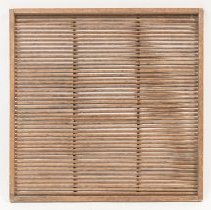
A square shaped, wooden apple drying rack. Square slats of wood have been placed vertically on a square frame. Four pieces of wood hold the slats in such as position to allow the maximum flow of air around the item to be dried. |
Year Range from |
1850 |
Year Range to |
1900 |
Dimensions |
W-91.5 L-91.5 cm |
History |
Item was one of the first items purchased for use in interpretation and programming activities at the Lewis Bradley Museum. Board members and volunteers of the Toronto Township Historical Foundation operated the museum when it first opened in 1967. In settler days, many trees were cut down rather than planted, since the land had to be cleared for crops. Plum and apple trees were the exception as settlers were dependent on the fruit for preserves and dried fruit. Apples were the earliest of all hard fruits to preserve and, as a result, were the most commonly consumed fruit in the 1830s. Fresh apples were cored, pared, and sliced right after harvest. The slices were threaded and then hung over the hearth for a few days to dry. Then they were wrapped in fabric, packed in barrels lined with straw, and stored in the root cellar. When needed, they were soaked in water or maple syrup before being baked in a pie. Some apples were pressed to make apple cider. Some of this cider was fermented into vinegar to be used to pickle beef for storage. Dried slices could also be eaten as apple chips. This apple drying rack would have been used to dry the apples. References: 'Upper Canada Cooking', (no date) by Maureen Adlard and Stephen Bourne. 'Pioneer Gardens at Black Creek Pioneer Village' by Eustella Langdon. Published by Holt, Rinehart and Winston of Canada. Toronto, 1972. |
People |
Manning, Hugh |